Why We Built StashAndSet Around Ready.gov
Use it every day. Rely on it when it counts.
When we started StashAndSet, we needed a way to decide what belonged in the store and what didn't. There are endless "survival" products out there, and plenty of them are gimmicks. So we picked a neutral, sensible starting point: the Ready.gov basic disaster supplies kit. (StashAndSet isn't affiliated with FEMA or Ready.gov; we just think their guidance is a sensible place to start.)
We already have a full checklist post that walks through the list item by item. This post is different. It's about why we use Ready.gov as our filter, and how each part of our catalog lines up with it.
Why Ready.gov, and not a prepper forum?
- It's practical. Ready.gov focuses on the basics that matter in common emergencies: storms, outages, evacuations.
- It's calm. No doomsday scenarios. Just water, food, light, information, first aid and documents.
- It's universal. It works whether you live in a Jacksonville apartment or a farmhouse.
Ready.gov also says your kit should be maintained: store food in a cool, dry place, replace expired items and rethink your needs every year. That fits our philosophy perfectly. If something is part of your everyday life, it gets checked and refreshed naturally.
Our one extra rule: it has to be useful on a normal day
Ready.gov tells you what to have. We add one filter on top: would you use this on an ordinary Tuesday? If the answer is no, it probably ends up forgotten in a closet. Here's how that plays out, category by category.
Light
Ready.gov says: a flashlight.
Our take: light you already use. The LED Stainless Steel Rechargeable Flashlight lives in a drawer, the 60-LED Rechargeable Lantern and Solar Rechargeable LED Lantern work on the patio or a camping trip, and the Cordless Rechargeable Desk Lamps sit on a desk or nightstand every day.
Information and communication
Ready.gov says: a battery-powered or hand-crank radio, and a cell phone with chargers and a backup battery.
Our take: the Solar Multifunctional Radio with hand crank covers the radio line. For the phone, a power bank you carry anyway, like the 20000mAh 65W Power Bank or Magnetic Wireless Portable Power Bank, plus a sturdy 100W Braided USB-C Cable. Waterproof Phone Pouches keep phones dry at the beach or in a storm. (As always, follow each manufacturer's charging and storage guidance.)
Food and water
Ready.gov says: water (one gallon per person per day for several days), at least a several-day supply of non-perishable food, and a manual can opener.
Our take: an Airtight Food Storage Bin keeps pantry staples fresh day to day and organized for a storm. A Silicone Folding Water Bottle is a gym bottle that packs flat in a go-bag. For can openers, we recommend trusted brands in our manual can opener guide.
First aid and medications
Ready.gov says: a first aid kit, plus prescription medications and other personal needs.
Our take: the vintage-style First Aid Box looks good on a bathroom shelf, and a travel pill organizer is handy for trips and evacuations alike.
Signaling, tools and repairs
Ready.gov says: a whistle to signal for help, and plastic sheeting and duct tape to shelter in place.
Our take: a whistle keychain rides on your keys every day, and the 5-Pack Heavy Duty Duct Tape handles everyday fixes as well as storm prep.
Warmth and comfort
Ready.gov says: a sleeping bag or warm blanket for each person, and a complete change of clothes.
Our take: a wearable fleece throw for the couch, a compact thermal emergency blanket for the car, and vacuum storage bags to keep spare clothes and bedding compact and dry. For passing the time, Ready.gov even suggests games and activities; waterproof playing cards are an easy one.
Documents and cash
Ready.gov says: cash, and important family documents (insurance policies, identification, bank records) saved electronically or in a waterproof, portable container.
Our take: the Fireproof Waterproof Document Bag and Fireproof Document Box cover the portable container. For the "electronically" part, a USB SSD enclosure makes a simple backup drive. A large-capacity leather wallet keeps emergency cash organized.
Carrying and storing it all
Ready.gov says: keep supplies in easy-to-carry containers, and keep a kit at home, at work and in the car.
Our take: the 40L Go-Bag Backpack and the waterproof weekender duffel travel with you anyway. At home, wheeled latching bins and a 5-shelf wire rack make the garage look organized, not fortified.
What we leave out
Using Ready.gov as a filter also tells us what not to sell. No tactical gimmicks, no fear-based "bug-out" gadgets, nothing you'd be embarrassed to leave on the counter. If it doesn't map to a real need, or you wouldn't use it on a normal day, it doesn't make the cut.
Build it at your own pace
You don't need the whole list at once. Pick one category that feels thin in your home, maybe light or documents, and start there. When you're ready for the full item-by-item rundown, read our Ready.gov emergency kit checklist, everyday edition, or browse the Ready Storage collection.
Use it every day. Rely on it when it counts.
— The StashandSet.com Team, approved by Barry Floore
More home
Be Prepared, Then Go Live Your Life
Preparedness without the fear: a few everyday things within arm's reach that quietly double as backup, so you can plan once and get on with life.
Read · 4 min →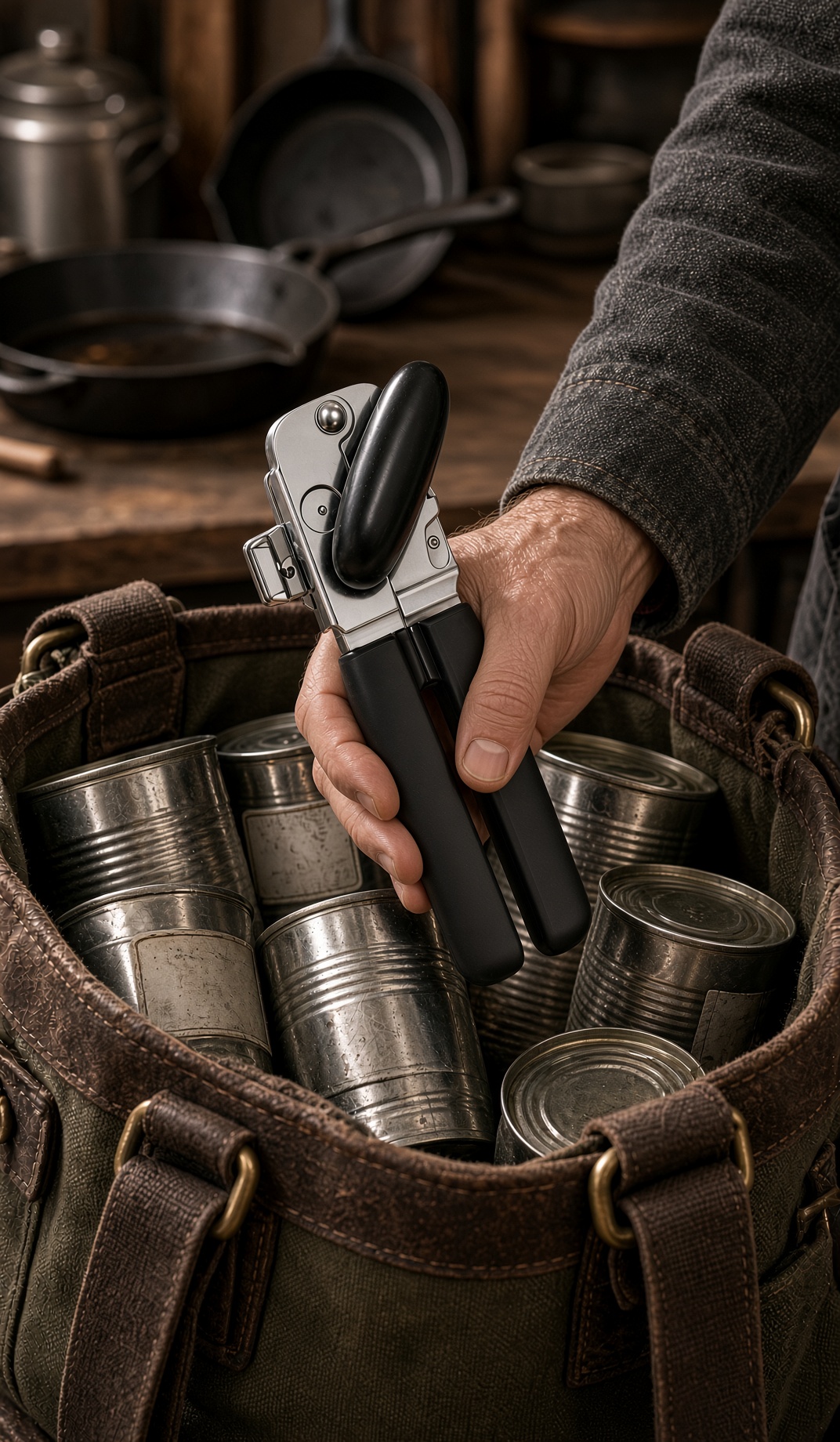
Best Manual Can Opener for Everyday Use and Your Emergency Kit
The OXO Good Grips is the manual can opener I'd keep in the drawer and the hurricane kit. Gorilla Grip is the budget pick that does the same job.
Read · 2 min →