Be Prepared, Then Go Live Your Life
Hope for the best. Plan for the worst.
There's a version of "being prepared" that takes over your life: a garage full of camo bins, a basement that looks like a bunker, and a constant low hum of worry. That isn't us, and it doesn't have to be you.
At StashAndSet we believe in something calmer. Prepare once, prepare well, and then go live your life. The goal isn't to expect disaster. It's to stop thinking about it, because you know you've handled the basics.
Preparedness is a background habit, not a hobby
Think about how you treat a spare tire or a smoke detector. You don't obsess over them. You check them now and then, and you're glad they're there. Good preparedness works the same way. It lives quietly in the background of an ordinary home.
Here in Jacksonville, hurricane season makes this very real. Most years the storms pass us by. Some years they don't. The households that ride it out with the least stress usually aren't the ones with the most gear. They're the ones whose everyday things already double as backup.
The "everyday carry, at home" mindset
People who carry a pocketknife, a flashlight and a pen every day call it "everyday carry." We like to apply the same idea to the home: a small set of useful things that are always within arm's reach, because you actually use them.
- Light where you already are. A lamp on your desk or nightstand that runs on a battery means a power outage at 9 p.m. is an inconvenience, not a scramble. Our Cordless Rechargeable Desk Lamps and 4-in-1 Magnetic Desk Lamp & Flashlight are made for exactly that.
- Power you top off out of habit. A power bank that charges your phone at the coffee shop is the same one that keeps it alive when the grid goes down. Keep it charged and it's always ready.
- Tools in the kitchen drawer. A good manual can opener opens Tuesday-night beans and storm-week soup alike. We wrote a whole post on why the manual can opener matters.
- Papers in one safe place. IDs, insurance and deeds live in one fire- and water-resistant spot, like a Fireproof Waterproof Document Bag, so you're not hunting through drawers when it counts.
Why "doesn't look like prepper gear" matters
Gear that looks like it belongs in a bunker gets stashed in a closet and forgotten. Batteries die, things go missing and nobody remembers where the kit is. Gear that looks like it belongs in your home gets used, maintained and trusted.
That's why we pick items that blend in: a lantern that's nice enough for the patio, a weekender bag you'd actually take on a trip, storage bins that make the garage look organized rather than fortified. Our tagline says it best: Use it every day. Rely on it when it counts.
Start small: the arm's-reach checklist
You don't need to do everything this weekend. Start with three spots in your home and ask one question about each: "If the power went out right now, what would I need here?"
Your nightstand
A light source that doesn't need the wall outlet, your phone charger and a power bank. A small whistle keychain on your keys is an easy addition, since Ready.gov lists a whistle to signal for help.
Your kitchen
A manual can opener, a few days of shelf-stable food you'd actually eat, and some way to store water. Rotate the food into normal meals so nothing expires.
Your entryway or closet
A bag that could become a go-bag in five minutes. Our 40L Go-Bag Backpack works as an everyday travel backpack. Toss in a first aid box, a travel pill organizer and a change of clothes and you're most of the way there.
Plan once, then let it go
The point of preparing isn't to feel anxious more often. It's to feel anxious less often. Once you've covered the basics, schedule a quick check twice a year (we like the start and end of hurricane season, or when the clocks change):
- Charge your power banks and lights.
- Swap out expired food, water and medications.
- Update copies of important documents.
- Make sure everyone in the house still knows where things are.
Ready.gov's "Make a Plan" page is also worth ten minutes. It walks through how your household will get emergency alerts, where you'd shelter and how you'd reach each other. (StashAndSet isn't affiliated with FEMA or Ready.gov; we just think their guidance is a sensible place to start.)
What we're really selling
We're not selling fear. We're selling a little less to worry about. Every item in our store is meant to earn its place in your home on an ordinary day, and then quietly be there on the day you need it.
If you want a starting list, our Ready.gov emergency kit checklist, everyday edition maps the official basics to things you'll actually use. Or just browse the shop and pick one arm's-reach item to start with.
Hope for the best. Plan for the worst. Then go enjoy your weekend.
— The StashandSet.com Team, approved by Barry Floore
More home
Why We Built StashAndSet Around Ready.gov
How StashAndSet uses the Ready.gov disaster kit list as its filter, category by category, with everyday picks you'd actually use.
Read · 4 min →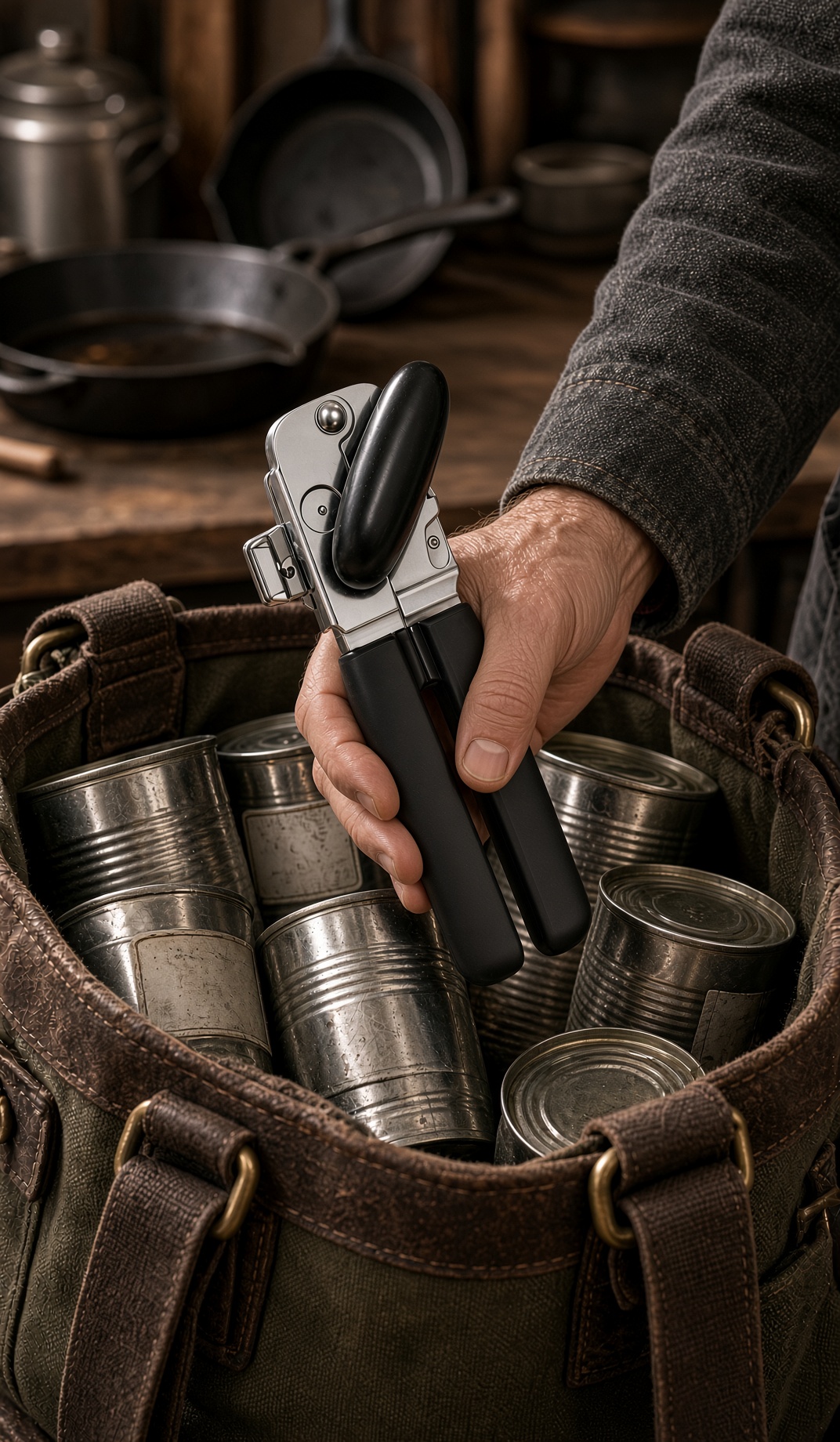
Best Manual Can Opener for Everyday Use and Your Emergency Kit
The OXO Good Grips is the manual can opener I'd keep in the drawer and the hurricane kit. Gorilla Grip is the budget pick that does the same job.
Read · 2 min →